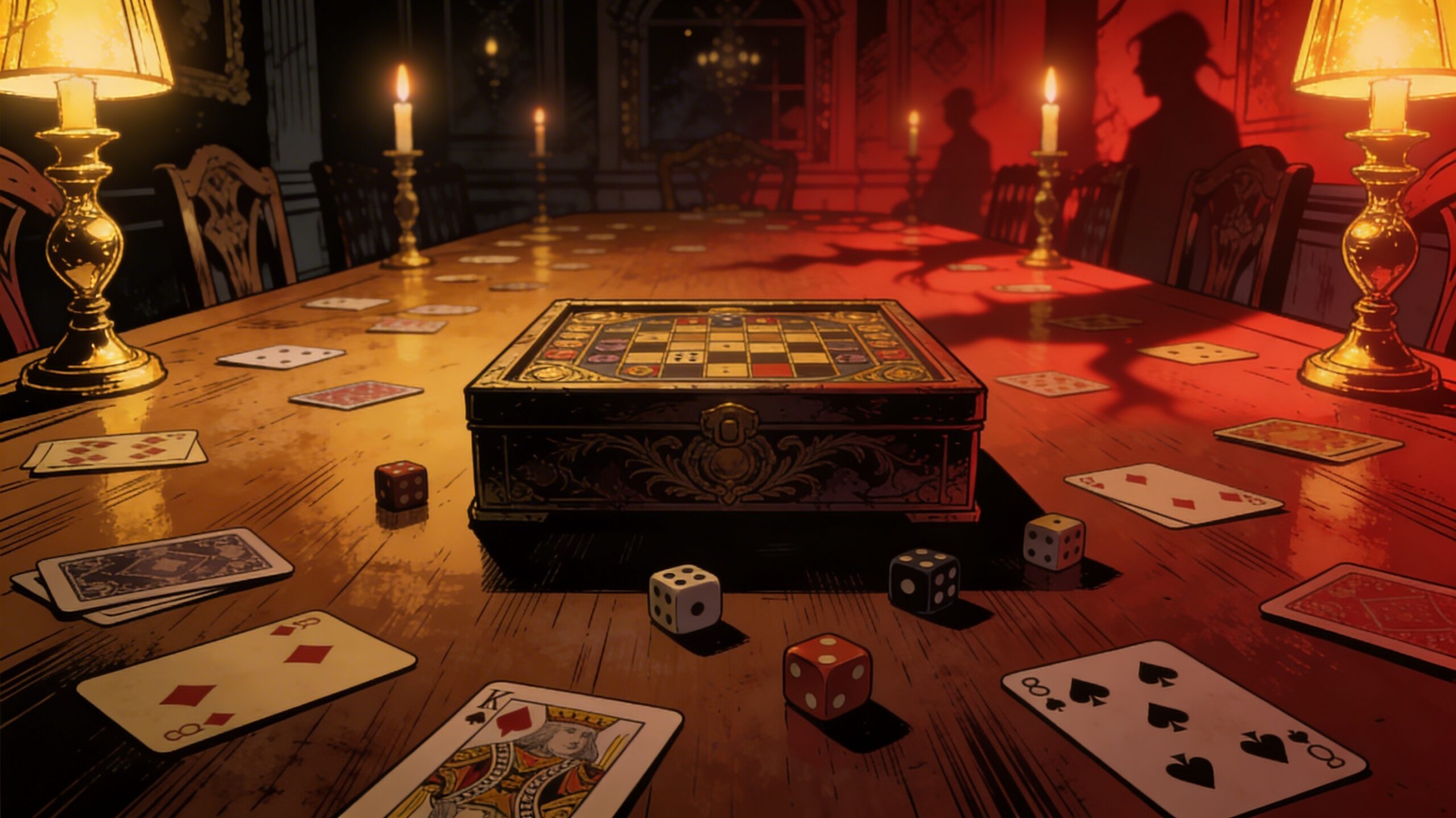

Ever since Ready or Not exploded as a fan‑favorite horror‑comedy, people have been asking the same question: is there any way to make Ready or Not 2 after that wild ending? On the surface, the finale looks pretty definitive. But if you look closer, there’s a loophole in the rules of the game that could easily open the door to a sequel.
In this article, we’ll break down the ending, explain what fans mean by the “Ready or Not 2 loophole,” and explore how a potential sequel could still work.
If you enjoy digging into whether movies and shows are actually worth your time, you might also like this honest breakdown:
Is Euphoria Worth Watching?
Quick Recap: What Happens at the End of Ready or Not?
Spoiler warning for the ending of Ready or Not.
At the end of Ready or Not, Grace survives her deadly wedding night with the Le Domas family, who believe they must play a ritual game with every new spouse to honor a mysterious benefactor known as Mr. Le Bail. If the couple draws “Hide and Seek,” the family has to hunt and kill the spouse before sunrise or they think they’ll all die.
Grace refuses to die quietly, fights back, and lives long enough for the sun to rise. For a moment, nothing happens, and it looks like the curse might have been fake all along. Then, in a gloriously over‑the‑top twist, the Le Domas family members start exploding one by one, proving that the supernatural rules were real after all.
The house burns, the bloodline seems wiped out, and Grace walks away covered in blood and ash. The story feels complete. So where’s the loophole?
The Ready or Not 2 Loophole: The Rules Are Not as Clear as They Look
The so‑called “Ready or Not 2 loophole” comes from one simple idea: we never get a fully detailed, airtight explanation of the curse’s rules. We know the basics from family stories and traditions, but not every edge case or exception.
That vagueness creates space for a sequel to exist without breaking the original film:
- We only ever see one family’s interpretation of Le Bail’s pact, not the full contract.
- The ritual rules are passed down orally and through tradition, which means misunderstandings and mistakes are possible.
- The curse clearly has supernatural power, but we don’t know how far it extends, how many people it covers, or whether the Le Domas are the only ones involved.
Because the movie never delivers a “legal document” set of rules, a follow‑up story can always reveal new clauses, loopholes, or hidden details that change how we understand the ending.
Loophole #1: Other Families Could Be Bound to the Same Pact
One of the easiest ways to justify Ready or Not 2 is to reveal that the Le Domas clan was not unique. Maybe Le Bail struck deals with multiple rich families, each tied to their own “games” and rituals.
That would instantly create a natural sequel concept:
- A different family in a different country with its own twisted tradition.
- A new bride or groom forced to play a game that’s similar, but not identical, to what we saw in the first movie.
- References to the Le Domas tragedy as a warning, urban legend, or news story that the new characters barely understand.
This approach uses the loophole that the curse’s scope was never defined. We were told about one deal; we were never told it was the only one.
Loophole #2: The Pact Could Survive Through Unseen Heirs
Another popular fan idea is that the Le Domas family might not be completely extinct. The ending shows the main household members exploding, but we never get a census of every single living Le Domas relative.
That leaves a few possibilities:
- Distant cousins, estranged relatives, or illegitimate kids who still carry the bloodline but weren’t present at the ritual.
- A surviving child sent to boarding school or raised outside the family who later discovers the truth.
- Relatives who legally changed their names and tried to escape the curse, only to be pulled back in.
In a sequel, one of these surviving heirs could be forced to deal with the fallout: Le Bail might come collecting on any unfinished business, or demand the continuation of the bloody tradition through a “revival” of the family.
The loophole here is simple: the film only shows us the inner circle, not the complete genealogy. That gives writers room to play.
Loophole #3: The Ritual Might Have Hidden Fine Print
The original movie treats the ritual as simple: draw “Hide and Seek,” kill the spouse before dawn, or die. But the more you think about it, the more questions appear.
A sequel could easily reveal:
- A previously hidden clause in the original contract or game box rules.
- That the ritual can be restarted, reset, or transferred under special conditions.
- That Le Bail can choose to keep the pact going if it entertains him or benefits him in some new way.
Maybe Grace’s survival and the spectacular death of the Le Domas family weren’t the end of the game at all, but the start of a new, darker phase. Perhaps Le Bail is less of a strict rule‑enforcer and more of a demonic showman who cares about chaos, not fairness.
This is the heart of the “Ready or Not 2 loophole”: the audience assumes the rules are final because the story ends, not because the rules were completely explained. A sequel can fill in the blanks however it wants—as long as it feels clever and consistent enough.
Loophole #4: Grace Herself Could Be Pulled Back In
Another possible angle for Ready or Not 2 is to bring Grace back, but not in a lazy way where everything simply repeats.
A sequel could explore:
- Psychological fallout: Grace is traumatized, famous, or on trial because authorities don’t believe her story.
- Supernatural aftermath: surviving the ritual might have bound her to Le Bail in some unknown way.
- Legal and financial fallout: she technically married into the family—does that give her ownership of the estate, or a new cursed responsibility?
You could imagine a scenario where a lawyer, investigator, or distant relative tries to reopen the Le Domas case, only to trigger the curse again. Grace might then be forced to confront a new generation of victims, trying to stop the cycle she barely escaped.
Here, the loophole is emotional and supernatural: we never learn what “price” Grace pays for surviving, beyond the immediate horror.
Loophole #5: Anthology Route – Same Game, New Story
There’s also a clean, simple option: treat Ready or Not 2 as an anthology sequel.
Instead of continuing Grace’s story, the sequel:
- Keeps the core concept: a deadly game tied to a satanic or demonic pact.
- Introduces a new location, new family, and new protagonist.
- Connects to the original only through small clues, references, or recurring symbols (Le Bail’s name, the game box, ritual phrases).
This lets the franchise use the “loophole” that the game itself—not the specific family—is the real star. The thematic continuity remains (rich people, rituals, social satire, brutal games), but every movie stands alone.
In horror, this is a proven strategy: think of how The Purge franchise expanded on a simple idea with different characters each time. Ready or Not could do the same.
Is a Ready or Not Sequel Actually a Good Idea?
Just because there’s a loophole doesn’t automatically mean a sequel is necessary. One of the reasons fans love Ready or Not is that it’s tight, self‑contained, and ends with a perfect mic‑drop moment.
A sequel would have to:
- Avoid cheapening Grace’s story and the original twist.
- Come up with rules or lore that feel like a natural extension, not a clumsy retcon.
- Balance horror and comedy as well as the first film did, without repeating the same beats.
Handled badly, Ready or Not 2 could feel like a cash‑grab that pokes holes in a great ending just to keep the IP alive. Handled smartly, it could deepen the mythology and explore how far Le Bail’s influence really spreads.
The Loophole Is Real – It’s Just a Question of Execution
The ending of Ready or Not looks final, but it’s not airtight. The vagueness of the rules, the possibility of other cursed families, the unknown number of surviving heirs, and the unexplored fine print of Le Bail’s pact all create a genuine “Ready or Not 2 loophole.”
In other words, a sequel is absolutely possible without completely breaking the original movie—it just requires clever writing and a clear vision of what the franchise wants to be.
Until a sequel is officially announced, fans will keep replaying that explosive ending and asking the same question: was that really the end of the game, or just the end of round one?